
The Room You're In Can Change Your Life — But Only If You're Not the Only One In It
A research-backed look at why community isn't optional for Black women
"Joining one group cuts in half your odds of dying next year." — Robert Putnam, Harvard Political Scientist & author of Bowling Alone
For decades, Black women have been told that success is a solo sport. Grind harder. Ask for less. Be twice as good. Show up even when no one sees you. And when you're exhausted from being the only one in the room, keep going anyway.
But what if the research has been telling us something different all along?
What if the room you build around you — not just the room you walk into — is one of the most powerful career, health, and life decisions you can make?
The data says: yes. And it says it loudly.
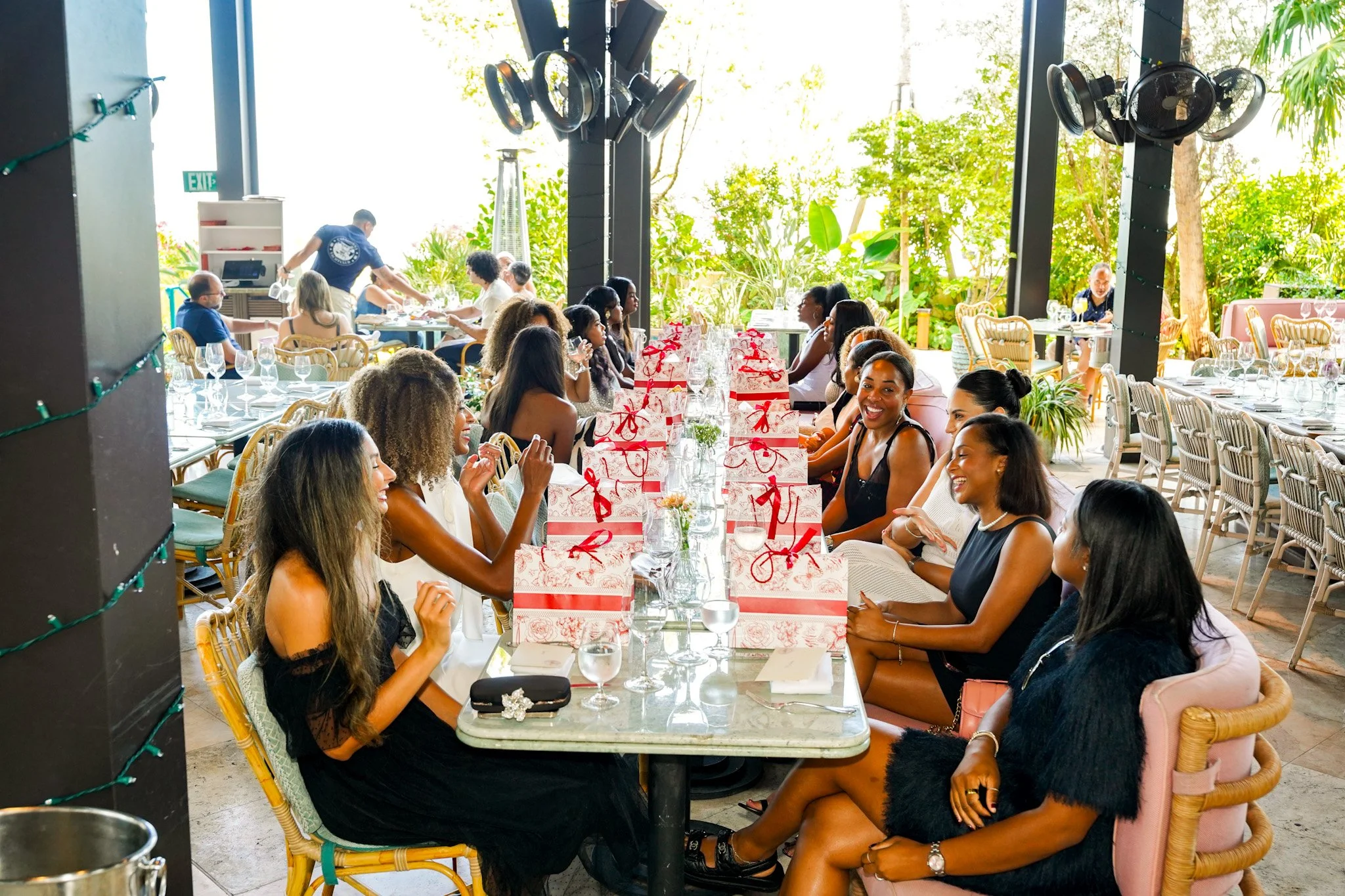
HerKind celebrating holiday brunch at Casadonna
🔬 What the Research Actually Says
1. Your Inner Circle Is a Career Asset (Especially If You're a Woman)
In 2019, researchers at Northwestern's Kellogg School of Management and the University of Notre Dame analyzed the social and communication networks of more than 700 MBA graduates who had all accepted leadership-level positions. What they found was striking.
For men, the size of the network predicted success. The bigger the network, the better the placement — regardless of who was in it.
For women? It was different.
Women with a female-dominated inner circle — just 2 to 3 close contacts they communicated with frequently — landed job placements 2.5x higher than women with low network centrality and a male-dominated inner circle.
More than 75% of the highest-ranking women in the study maintained a tight inner circle made up predominantly of other women. Not a massive network. Not a sea of LinkedIn connections. A small, intentional group of women — well-connected to diverse circles — who shared information, opportunity, and access.
The key wasn't just who they knew. It was those who had their back.
And when women built networks that looked like their male counterparts'? They were more likely to hold lower-ranking positions.
The conclusion is clear: for women navigating male-dominated professional environments, same-gender community is a strategic advantage, not a soft preference.
2. America Is Lonelier Than It Has Ever Been — And That Loneliness Is Killing Us
In 1995, Harvard political scientist Robert Putnam published research that changed how we understand community in America. He called it Bowling Alone. His argument: the country was losing its social fabric — not dramatically, but quietly, across every measure of civic and communal life.
His findings, drawn from nearly 500,000 interviews, revealed:
Americans belong to fewer organizations, know their neighbors less, meet with friends less frequently, and socialize with their families less often than previous generations
Participation in parent-teacher associations dropped from 12 million in 1964 to 5 million by 1982
Membership in women's civic clubs fell by more than 50% since the 1960s
Every 10 minutes of commuting reduces all forms of social capital by 10%
Social capital declined across 7 separate measures — from political participation to mutual trust — consistently, since the 1970s
And then came the number that should stop us all:
Joining just one group cuts your odds of dying next year in half.
Not a medical intervention. Not a prescription. A group. A community. A room with your people in it.
The 2023 documentary Join or Die (On Netflix until April 2026) — which holds a 95% approval rating on Rotten Tomatoes — revisits Putnam's research and argues that America's social unraveling isn't just a personal problem. It's the root of our political crisis, our mental health epidemic, and our collective exhaustion.
3. For Black Women, the Stakes Are Even Higher
The research on community isn't abstract for Black women — it's personal and urgent.
A 2025 study published in Affilia: Feminist Inquiry in Social Work titled "Community is Key!" found that Black women at predominantly White institutions who lacked spaces where their identities were represented experienced measurable harm to their mental health and sense of belonging — while those who found community developed stronger coping skills and academic resilience.
Sister circles — peer-led community groups rooted in Black women's culture — have been studied as health interventions with extraordinary outcomes:
In a depression intervention study for Black women ("We See You, Sis"), retention reached 83.3%, and program completion hit 82% — numbers researchers described as "highly acceptable" because the format aligned with participants' personal and collective values
Participants in anxiety-focused sister circle studies rated the circles' effectiveness at 8.8 out of 10
In a study of 310 Black women exposed to trauma in Baltimore, social support partially mediated the association between stress and PTSD symptoms — meaning community wasn't just comforting, it was clinically protective
A 2024 study in Psychology of Women Quarterly, "She Has a Village," found that Black mothers who intentionally built their village passed the benefits across generations — their daughters gained access to natural mentorship, positive relationship models, enriching opportunities, and gendered racial identity affirmation. The village doesn't just support one woman. It shapes the next one.
The Through-Line
Whether you're looking at career placement data from Kellogg, civic decline research from Harvard, or mental health outcomes from peer-reviewed journals, the evidence points to the same place.
Community is not supplementary to success. It is the infrastructure of it.
And for Black women navigating workplaces that weren't built with them in mind, rooms that don't reflect them, and systems that demand twice the effort for half the recognition — that infrastructure is not optional. It is survival. It is a strategy. It is the exhale.
What This Means for You
You don't need a massive network. You need 2 or 3 women who see you, who are connected to different worlds than yours, and who will share what they know.
You don't need to join everything. You need to join something — and research suggests even one group changes your odds.
You don't need to have it together before you show up. The research on sister circles is clear: the power comes from being in the room together, not arriving already healed.
The room changes when you're not the only one in it. And so do you.
Source:
To Land Top Jobs, Women Need Different Types of Networks than Men — Kellogg Insight, Northwestern
Community is Key! Sense of Belonging among Black Women — Affilia, 2025
Feasibility and Acceptability of the We See You, Sis Sister Circle — ScienceDirect
Sister Circles as a Culturally Relevant Intervention for Anxious African American Women — PMC
Bowling Alone: America's Declining Social Capital — Robert Putnam